
Trazodone's prescribing information does list weight gain. In the label's controlled clinical studies, weight gain was reported more often with trazodone than with placebo. Yet the label lists swelling and weight loss, not weight gain, among the most common side effects. This guide covers what the label reports, why swelling differs from body fat, and what to note for your prescriber.
Majesta Health does not offer trazodone or psychiatric prescribing, and this article does not suggest using trazodone to change weight or changing depression, anxiety or sleep treatment through a weight-loss service.
What the trazodone label reports about weight
The trazodone tablet label on DailyMed (revised April 2026) reports these controlled trials in section 6.1. The FDA prescribing information for Raldesy oral solution (supplement S-002, section 6.1) cites the same tablet studies. Its table gives no separate estimate for people taking the oral solution.
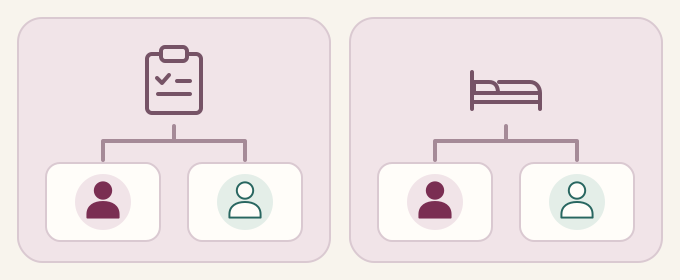
Weight gain reported as an adverse reaction in tablet trials
| Setting | Trazodone | Placebo |
|---|---|---|
| Outpatients | 5% of 157 participants | 2% of 158 participants |
| Inpatients | 1% of 142 participants | 0% of 95 participants |
Outpatients: weight gain was reported as an adverse reaction by 5% of the 157 participants taking trazodone and 2% of the 158 participants taking placebo.
Inpatients: weight gain was reported as an adverse reaction by 1% of the 142 participants taking trazodone and 0% of the 95 participants taking placebo.
The four treatment groups belong to two separate study settings. Read each trazodone–placebo comparison separately. DailyMed, §6.1, Table 2, revised April 2026.
Three cautions help when you read these figures:
- Keep the groups separate. Each group was compared with its own placebo group, so the two should not be added together into one rate.
- Do not guess at the gap. The label gives no reason why the groups differ, and this article does not offer one.
- They are not a personal forecast. The label itself says adverse reaction rates from clinical trials cannot be directly compared with another drug's trials and may not reflect the rates seen in practice.
The same table also has a weight loss row. The label's highlights list edema and weight loss among the most common adverse reactions, and the Medication Guide lists swelling and weight loss among the most common side effects. Weight gain is in neither list. So the label reports weight changes in both directions.
Why swelling is not the same as gaining fat
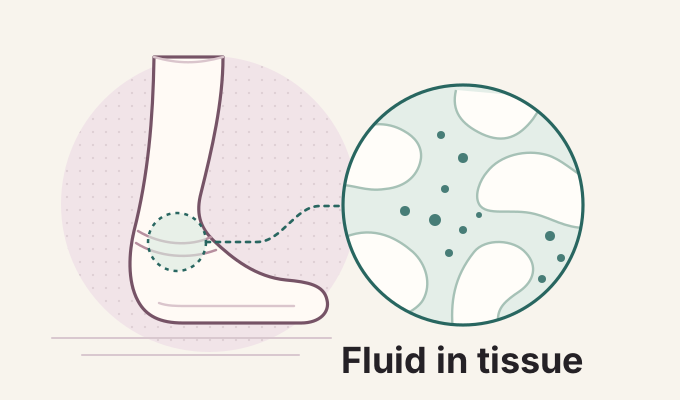
In the label's table, edema (swelling) shares one row with skin conditions, labeled "Skin Condition/Edema". That row does not show how often swelling alone happened. The label also does not say whether any reported weight change came from fluid or from body fat.
That matters because a scale cannot tell the two apart. MedlinePlus explains that swelling is caused by a buildup of fluid in the tissues, and that the extra fluid can raise weight quickly, over days to weeks. So a quick rise on the scale that comes with puffy ankles, feet or hands is worth reporting as swelling rather than assuming it is fat. It is also not something to ignore: the Medication Guide lists swelling among trazodone's most common side effects and says to call your doctor for medical advice about side effects.
Check your understanding
Can I combine both settings into one rate?
Each setting had its own placebo group. Read the two comparisons separately.
Can a scale tell me whether a weight change came from fluid?
A scale alone cannot distinguish fluid from body fat. Note any new swelling and discuss it with your prescriber.
A weight and symptom note for your prescriber
Write down what you observed, not what you think caused it:
When to call your prescriber sooner
The Medication Guide says to call your healthcare provider between visits as needed, especially if you are worried about symptoms. A change that starts suddenly, swelling that appears or spreads, or a change that began soon after a dose change are all good reasons to call rather than wait for a routine visit.
Do not stop trazodone on your own. The Medication Guide says not to stop taking it without talking to your healthcare provider. The label recommends reducing the dose gradually rather than stopping abruptly whenever possible, because adverse reactions may occur when it is stopped (sections 2.6 and 5.8). Any change in dose or timing is a decision for you and your prescriber to make together.
Symptoms that need a call right away
If trazodone was prescribed for sleep
The FDA-approved label indicates trazodone tablets for major depressive disorder in adults. If yours was prescribed for sleep, that is an off-label use. The label does not give a separate weight-gain rate for people taking trazodone for sleep. If you notice a change, keep the note and talk to your prescriber before changing your medication or adding another sleep aid. The Medication Guide also says not to drink alcohol or take other medicines that make you sleepy or dizzy while taking trazodone until you talk with your healthcare provider.
Related reading
- Does Prozac cause weight gain? looks at what another antidepressant's label and longer studies show.
- Does gabapentin cause weight gain? covers another medicine whose label lists swelling.
- Why am I not losing weight? reviews everyday reasons weight can change.
Each page covers its own medicine or topic, so the figures are not a ranking.
This article is for informational purposes only and does not constitute medical advice, diagnosis or treatment. It does not recommend starting, stopping or changing any medicine. Sources checked November 10, 2026. The trazodone tablet label on DailyMed was revised April 2026, and the Raldesy FDA prescribing information used here is supplement S-002.
Frequently Asked Questions
Does trazodone cause swelling?
Swelling is listed among the most common side effects in trazodone's Medication Guide. In the label's trial table, edema shares a row with skin conditions, so the label gives no separate rate for swelling alone. Contact your prescriber promptly if swelling is new or spreading. If swelling occurs with shortness of breath or chest pain, call 911 in the United States.
Can trazodone cause weight loss?
Yes, it has been reported. Weight loss is listed among the most common side effects in the Medication Guide, and the label's trial table has a weight loss row as well as a weight gain row.
Should I stop trazodone if I gain weight?
Not on your own. The Medication Guide says not to stop trazodone without talking to your healthcare provider, and the label recommends reducing the dose gradually rather than stopping abruptly whenever possible.
Sources
This article is based on the following primary sources. Links open the original documents.
- 1.Trazodone hydrochloride tablets: prescribing information and Medication Guide (Torrent Pharma Inc. labeling, repackaged by RemedyRepack Inc.), DailyMed, revised April 2026; highlights, boxed warning, sections 1, 2.6, 5.8 and 6.1 (Table 2), and the Medication Guide · DailyMed, U.S. National Library of Medicine · accessed
- 2.Raldesy (trazodone hydrochloride) oral solution: U.S. prescribing information, supplement S-002, section 6.1 · U.S. Food and Drug Administration · accessed
- 3.Swelling. MedlinePlus Medical Encyclopedia · MedlinePlus, U.S. National Library of Medicine · accessed
- 4.Foot, leg, and ankle swelling. MedlinePlus Medical Encyclopedia, When to Contact a Medical Professional · MedlinePlus, U.S. National Library of Medicine · accessed
- 5.Suicide Prevention, Find help and support (reviewed August 2026) · National Institute of Mental Health · accessed
Majesta Health articles are written against primary sources (FDA labeling, NIH and CDC publications, state statutes) and each one passes a documented compliance review before publication. Where an article cites external sources, they are listed at the end of that article so you can check them yourself. No article currently carries an individual physician review; when a physician reviews an article, that page will show the reviewer's name, NPI and review date.
- Written against primary sources: FDA labeling and safety communications, NIH and CDC publications, state statutes and medical board rules
- Documented compliance review against FDA, FTC and LegitScript requirements before publication
- External sources, where an article cites them, are listed at the end of that article with links to the original documents
- Compounded medications are described as not FDA-approved as final products on every page that mentions them